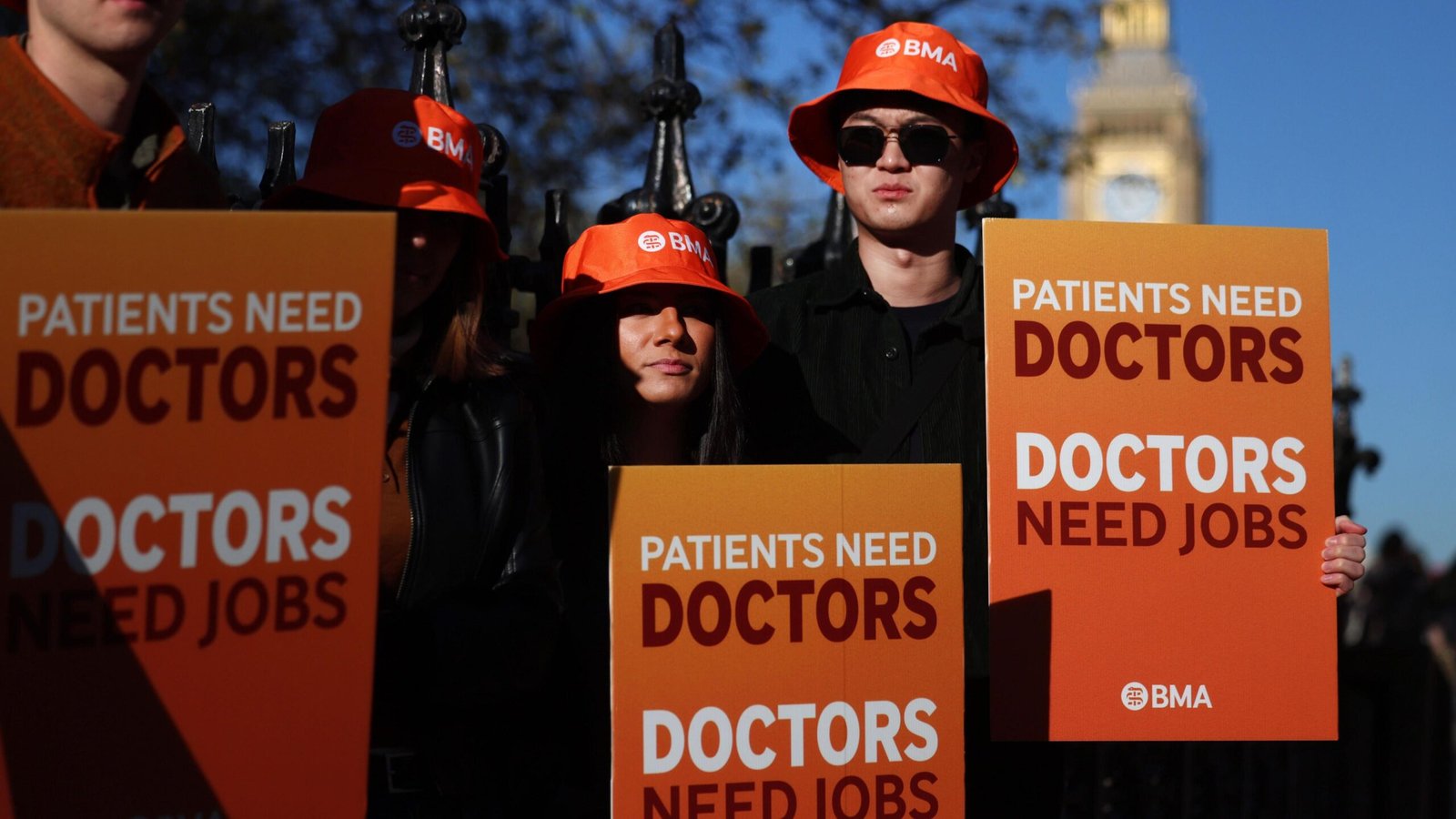

Resident doctors in England have suspended strike action that was due to begin on Monday, following a last-minute revised offer from the government. The British Medical Association (BMA) confirmed that the new proposal will now be put to its members for a formal vote, marking a significant shift in the long-running pay dispute.
The planned walkout, which had been scheduled to run from 07:00 BST on Monday 15 June until 06:59 on Friday 19 June, would have marked the 16th round of industrial action in the ongoing disagreement over pay and working conditions. The cancellation comes after days of intensive talks between the two sides, including negotiations that continued into Saturday, just hours before the strike was officially called off.
What’s in the new offer?
According to government sources, the new offer does not include additional funding for the current financial year. Instead, it proposes a faster progression through pay scales starting next year, which would allow resident doctors to reach higher salary bands more quickly. The offer also includes 4,500 extra training places for newly qualified doctors and commits to covering the cost of doctors’ exam fees.
Health Secretary James Murray described the development as a “positive and welcome development – especially for patients” and emphasised that the country “simply cannot afford to increase the pay offer for this year.” He added: “I am pleased that the BMA have recognised this, which has allowed us to make progress in other areas, such as training places and working conditions.”
Dr Jack Fletcher, chairman of the BMA’s resident doctors committee, said: “We have always been clear that no strikes needed to go ahead if we received an offer appropriate to put to our members. This should not have been left to the last moment, but we hold up our end of the bargain when the government shifts its position.”
Background to the dispute
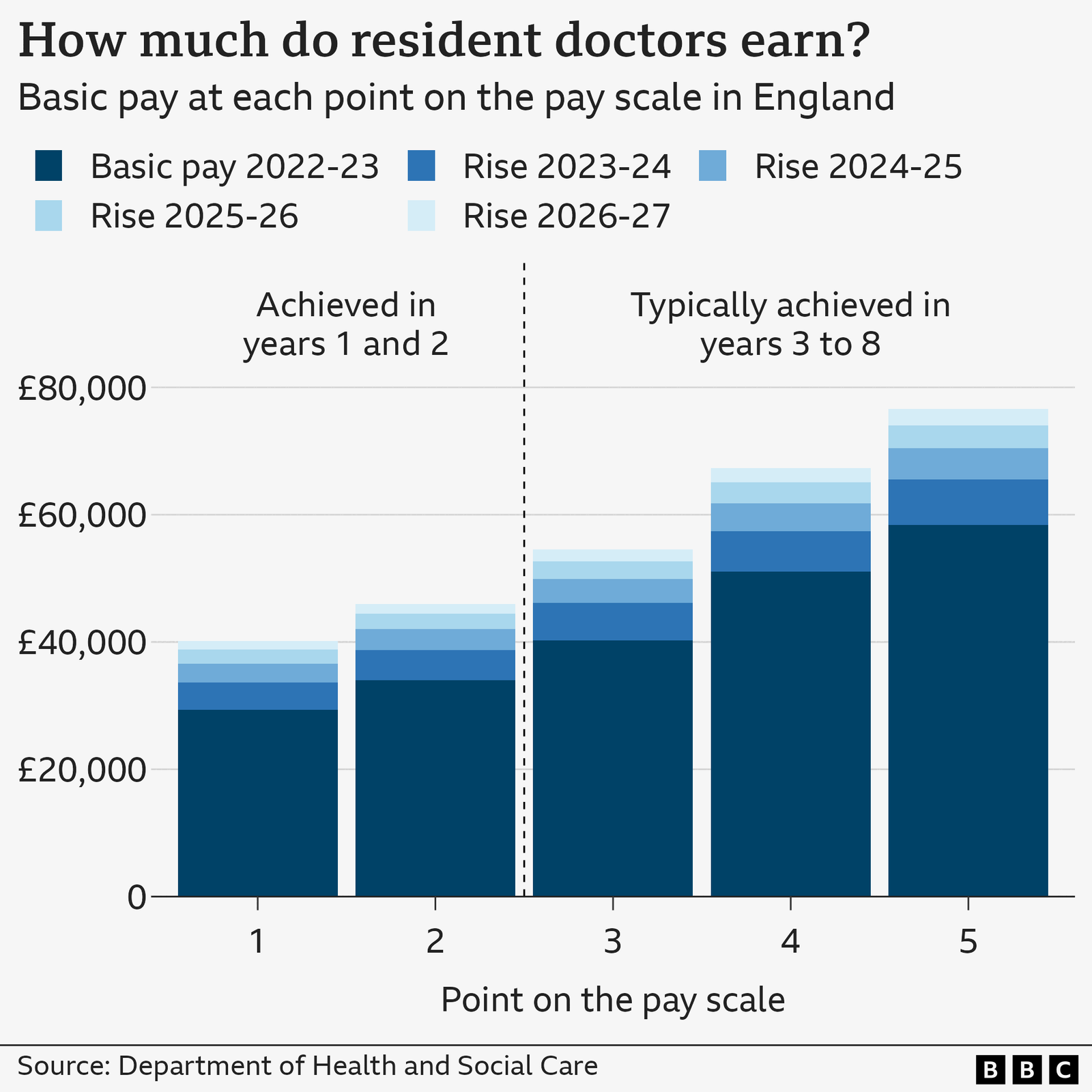
Resident doctors, previously known as junior doctors, have received pay rises worth 33% over the past four years, including a 3.5% increase this year. Starting salaries now stand at just over £40,000, with the most senior resident doctors earning £76,500 in basic pay. Additional earnings are available for working unsociable hours and overtime.
However, the BMA has consistently argued that doctors are still being paid a fifth less than they were in 2008 once inflation is taken into account. This gap has been at the heart of the dispute, which has seen repeated strikes since 2023.
Previous offers and rejections
The most recent strike action was a six-day walkout in April, after the BMA rejected an earlier offer that included more training jobs, faster career progression, and a plan to cover out-of-pocket expenses such as exam fees. The union had called for a more substantial pay restoration, which the government deemed “unrealistic and unaffordable.”
The strike was originally called after Health Secretary James Murray made it clear during a meeting in May that he was not willing to negotiate on pay. The BMA said he had shown “the same unwillingness to move” as his predecessor, former health secretary Wes Streeting.
Impact on patients and hospitals
While the cancellation of the strike has been welcomed by both sides, it came too late to avoid some patient disruption. NHS England confirmed that 95% of operations and appointments were due to go ahead as planned, but thousands of procedures have already been postponed. Reinstating these on the original timetable will be a significant challenge for hospitals already under pressure.
Sir Ciarán Devane, chief executive of the NHS Alliance, called the suspension a “vital chance to reset the conversation” and urged both sides to strike a “fair, sustainable agreement.” He said: “This is a moment for constructive dialogue, not complacency. The NHS needs certainty, and patients need confidence that their care will not be disrupted again.”
What happens next?
The BMA will now hold a ballot of its resident doctor members to decide whether to accept the new offer. The outcome of that vote will determine whether the dispute is finally resolved or whether further industrial action could be threatened in the future.
Government sources have expressed cautious optimism that the offer represents a genuine breakthrough, with one describing it as a “chance to draw a line under the damaging disputes of recent years.” However, they also acknowledged that the balloting process will take time, and that the NHS must remain prepared for all eventualities.
For patients, the immediate relief is that the planned strike will not go ahead. But the broader question of how to address the underlying concerns about pay, workload, and retention in the medical profession remains unresolved. The coming weeks will be crucial in determining whether this latest offer marks the end of the dispute or simply a temporary pause.
As the NHS continues to grapple with record waiting lists and staff shortages, both sides will be hoping that a negotiated settlement can finally bring stability to the health service. The balloting process will be watched closely by doctors, patients, and policymakers alike.