

New analysis reveals a stark postcode lottery for NHS dentistry, with hundreds of practices across England abandoning NHS work over the last decade. The service is increasingly drifting towards a two-tier system, where access to affordable dental care depends heavily on where you live and what you can afford.
The Scale of the NHS Dental Exodus
Data analysed by the Nuffield Trust shows that nearly 600 dental practices in England have withdrawn from NHS dentistry in the last 10 years. This means more than one in ten practices that once offered NHS care no longer do so, leaving some communities with virtually no access to NHS appointments.
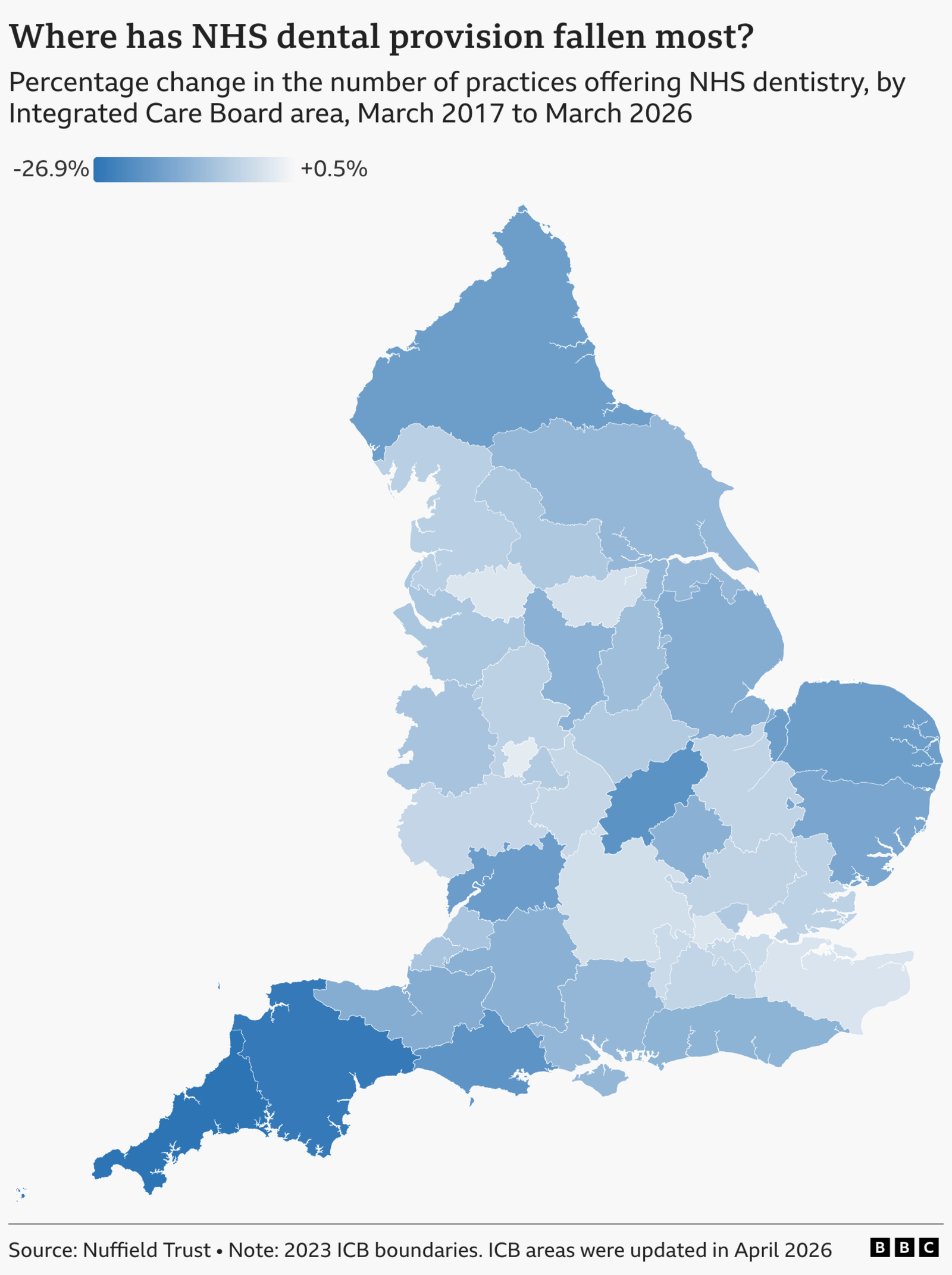
The decline has been particularly sharp in parts of the South West and East of England. Cornwall, Devon, and Northamptonshire have seen some of the biggest reductions. In Cornwall, more than a quarter of practices that previously offered NHS treatment have stopped, making it one of the starkest examples of this shift.
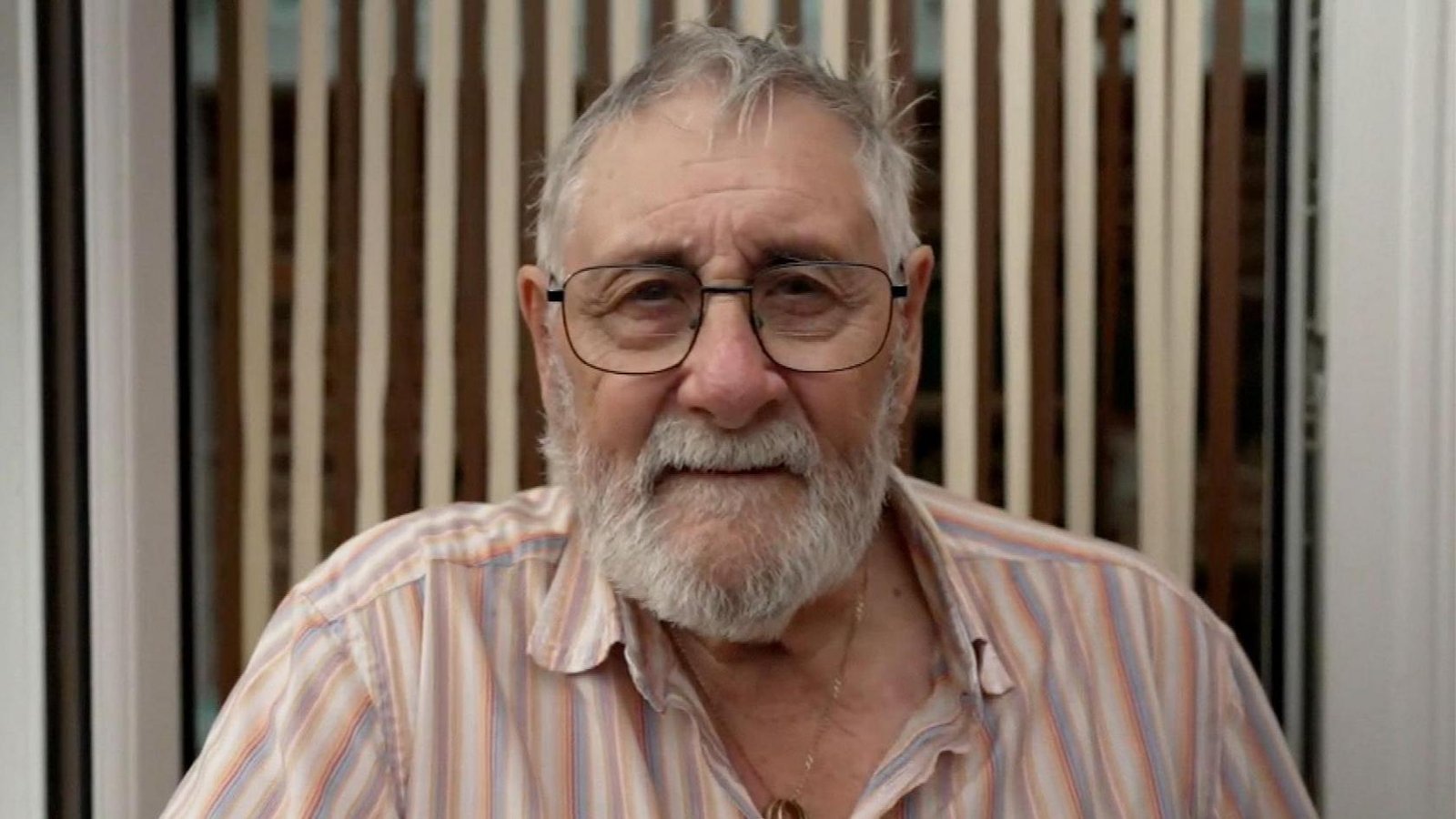
In Somerset, fewer than one in five dental practices now offers NHS services. Alan, an 83-year-old resident, has given up trying to find an NHS dentist. “I used to try, but getting a dental appointment anywhere near where I live would be impossible,” he says. Alan has only one tooth remaining after the others “crumbled out over the years” and has had to adapt what he eats, though he jokes he has perfected a way of eating Brazil nuts.
Why Are Dentists Leaving the NHS?
Dentists say the current NHS contract is simply not viable. Many have handed back their contracts because providing NHS care is loss-making. Vivak Shah, who runs three dental practices in Northamptonshire, continues to offer NHS treatment but says it operates at a loss. He no longer takes on new NHS patients.
“Each year we struggle to decide what to do, and there is a limit to how much the private side can cover the NHS losses,” says Shah. He warns that if practices stop providing NHS treatment, many patients could be left in pain or forced to seek help in hospital accident and emergency departments.
A Dentist’s Emotional Decision
Jim Sykes, a dentist in Hexham, handed back his NHS contract in 2024. “It was a really hard emotional decision, but the NHS work was running at such a loss. I had to think of my team of staff and make it work,” he explains. Sykes asked if he could continue treating just children but was told he had to accept adults as well or give up the NHS work entirely.
“There has been a real breakdown in trust for me. Even if there was a new government offer, I would still be very nervous about entering a new NHS contract,” he says. Sykes adds that none of his friends from his dentistry graduating class still works in the NHS. “My friends have gone private, retired or teach – any pathway to avoid NHS dentistry.”
The Impact on Patients
The consequences are severe. NHS dental activity is 8% lower than it was pre-Covid, and six in ten adults have not seen an NHS dentist in two years. Of those who attempted to get a new appointment in the last two years, just 38% were successful, according to a Nuffield Trust survey.
Mark Dayan, head of public affairs at the Nuffield Trust, says: “A contract handed back in one town attracts little national attention on its own but repeated across the country for a decade it amounts to the quiet transformation of dentistry into a two-tier service. Access to dental care increasingly depends on what people can afford to pay and where they live.”
Regional Variations and the Bigger Picture
While most parts of England recorded declines in practices offering NHS dental care, the reductions were smallest in North West London, the Black Country, and North East London. North East London was the only area to see any increase, recording one additional practice offering NHS treatment compared with a decade ago. Every other region saw numbers fall.
It’s important to note that the number of practices doing NHS work is not the same as the total NHS capacity, as practices can vary in size. However, other measures, such as the amount of treatment being done, also show a decline, though not as steep as the fall in practice numbers.
Not a Shortage of Dentistry, But a Shortage of NHS Dentistry
Overall dentist practice numbers in England have actually risen over the last decade. “This is not a shortage of dentistry but a shortage of NHS dentistry,” says Dayan. “Practices will need to be incentivised back into NHS work in the places where the NHS footprint has thinned most.”
Government Response and Future Outlook
The government says it is changing the dental contract and training more dentists in the areas most in need. It also plans to make it a requirement for newly qualified dentists to practice in the NHS for a minimum period of at least three years.
Shiv Pabary, chair of the British Dental Association’s General Dental Practice Committee, says the situation is “the direct result of choices made by successive governments.” He warns that unless ministers “fix and fund NHS dentistry,” more dentists could choose to reduce their NHS work or leave the service altogether.
Campaign group 38 Degrees calls the current dental crisis “shameful,” with people being “forced to pay money they can’t afford or suffer with the pain, shame, and further complications that come from being denied vital NHS healthcare.”
The findings come as ministers have pledged to tackle so-called “dental deserts,” but dentists argue the current deal is not viable. The quiet transformation of dentistry into a two-tier service is already underway, and without significant intervention, the divide between those who can access NHS care and those who cannot is set to widen further.