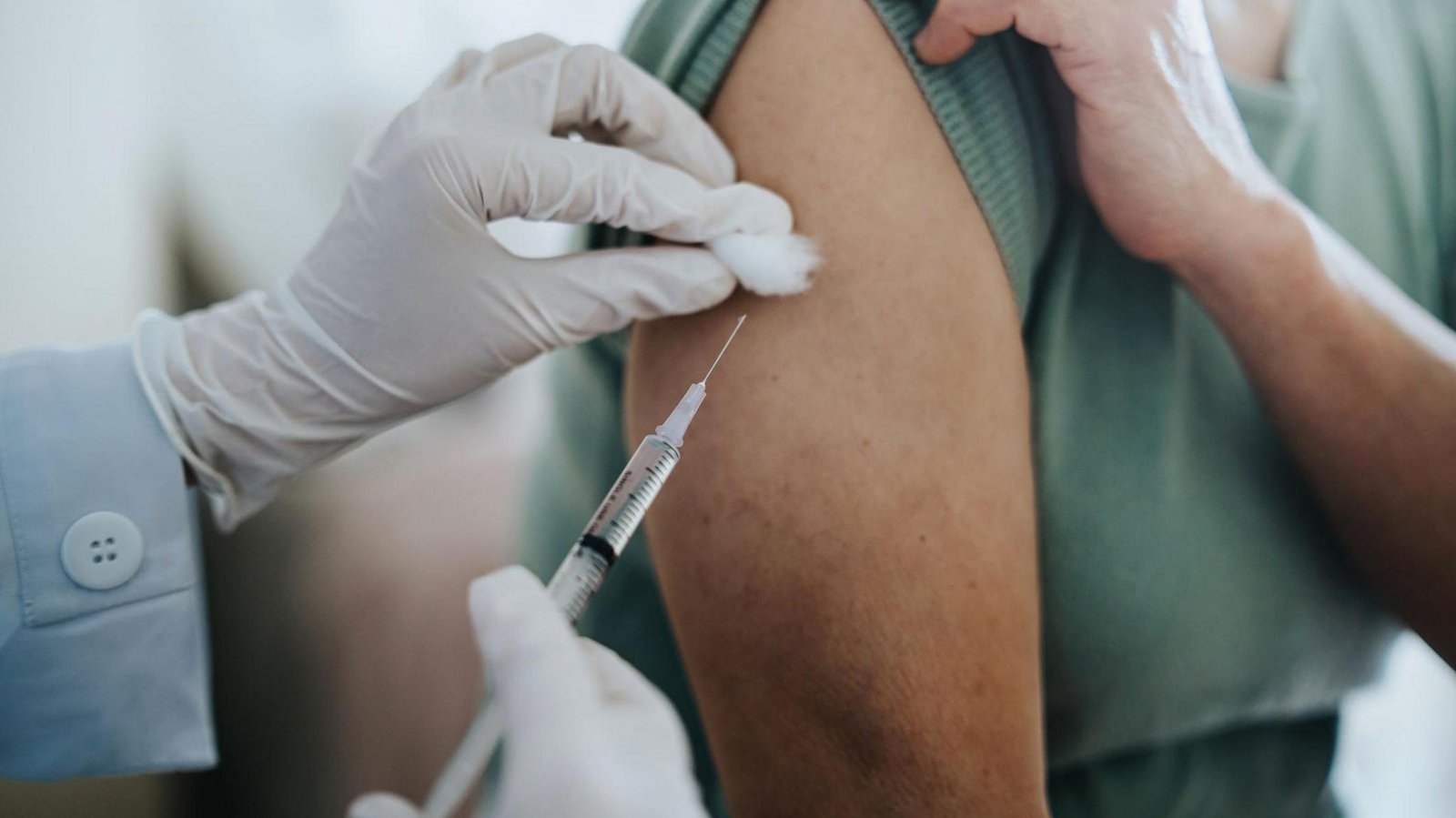
A groundbreaking personalized vaccine, when paired with an existing immunotherapy drug, has shown remarkable success in preventing skin cancer from returning in patients, according to early trial results. This development could mark a turning point in how certain cancers are treated, offering new hope for those at high risk of recurrence.
The vaccine, developed jointly by pharmaceutical giants Merck and Moderna, was administered to patients with high-risk melanoma—a serious form of skin cancer—following surgical removal of their tumors. The preliminary findings indicate that this innovative approach significantly extended the period during which patients remained cancer-free, although the exact duration of this benefit has not yet been specified by the companies.
Cancer specialists have greeted the news with cautious optimism, describing it as a potential breakthrough while underscoring that the full data has not yet been released or subjected to peer review—a process where independent experts scrutinize the methodology and results. Furthermore, even after successful trials, the treatment would require regulatory approval before it could become available to patients on the NHS, a process that typically takes considerable time.
How the Vaccine Works
The vaccine, known as Intismeran, is designed to be personalized for each patient. It utilizes messenger RNA (mRNA) technology—the same platform used in several COVID-19 vaccines—to target specific mutations present in an individual’s cancer cells. To create this bespoke vaccine, scientists surgically remove a small portion of the patient’s tumor, sequence its DNA, and then manufacture a vaccine that instructs the immune system to recognize and attack any remaining tumor cells that might otherwise evade detection.
This approach represents a significant departure from traditional cancer treatments, which often involve broad-spectrum therapies like chemotherapy that can damage healthy cells. Instead, the personalized vaccine aims to train the body’s own defenses to fight the cancer with precision, potentially reducing side effects and improving outcomes.
The Trial Details
The phase three trial enrolled more than 1,000 patients who had high-risk stage two, three, or four melanoma. This meant participants ranged from those with large tumors confined to a specific area to those whose cancer had already spread to other parts of the body. All patients had undergone surgery to remove their tumors before receiving the treatment.
Participants were divided into two groups: one received the vaccine in combination with Keytruda (pembrolizumab), an immunotherapy drug already widely used in cancer treatment, while the other received Keytruda alone. The companies reported that the combination therapy significantly increased the time patients remained cancer-free and reduced the risk of the disease spreading to other organs, compared to Keytruda monotherapy.
‘Shows Promise’ Says Experts
The announcement has generated considerable excitement within the medical community, and shares in both Merck and Moderna surged following the news. However, experts are urging caution until the complete data is available for review.
Dr. Talisia Quallo, head of prevention and early detection at Cancer Research UK, described the research as “shows promise” but emphasized that the interim data needs full evaluation. “It’s vital that research like this continues to be funded so that more people with cancer can have personalized treatment options to help them live longer, better lives,” she added.
Dr. Lennard Lee, a consultant medical oncologist and associate professor at the University of Oxford, echoed this sentiment: “This is certainly good news for patients with melanoma, but the study has much wider implications. It provides proof of principle that personalized cancer vaccines work.”
Beyond Melanoma
The implications of this research extend far beyond melanoma. Merck and Moderna are already testing similar personalized vaccines for other types of cancer, including lung, bladder, and kidney cancers. If these trials prove successful, it could pave the way for a new class of cancer therapies that are tailored to each patient’s unique tumor profile.
Stephane Bancel, chief executive of Moderna, hailed the findings as a “pivotal moment” in the field of cancer research. The ability to harness the immune system in such a targeted way has long been a goal of oncologists, and these results suggest that goal may be within reach.
What This Means for Patients
For patients currently battling melanoma, this news offers a glimmer of hope. The combination of the vaccine and Keytruda could potentially reduce the risk of recurrence, which is a major concern for those who have undergone surgery for high-risk tumors. However, it is important to remember that this treatment is not yet available outside of clinical trials, and there is no guarantee it will receive regulatory approval.
The path to widespread availability involves several more steps. After the trial is completed, the results must be published in a peer-reviewed journal, then submitted to regulatory bodies like the FDA in the United States and the MHRA in the UK. Even after approval, health systems like the NHS would need to assess the cost-effectiveness of the treatment before it could be offered to patients.
Looking Ahead
Despite these caveats, the scientific community is optimistic. The success of this trial represents a significant step forward in the fight against cancer, demonstrating that personalized medicine is not just a theoretical concept but a practical reality. As research continues, it is likely that we will see more such vaccines developed for a wider range of cancers, potentially transforming the landscape of oncology.
For now, the focus remains on completing the trial and ensuring the results are robust. The companies have not yet released the full dataset, and independent scrutiny will be crucial to validate the findings. Nevertheless, the early signals are encouraging, and many experts believe this could be the beginning of a new era in cancer treatment.