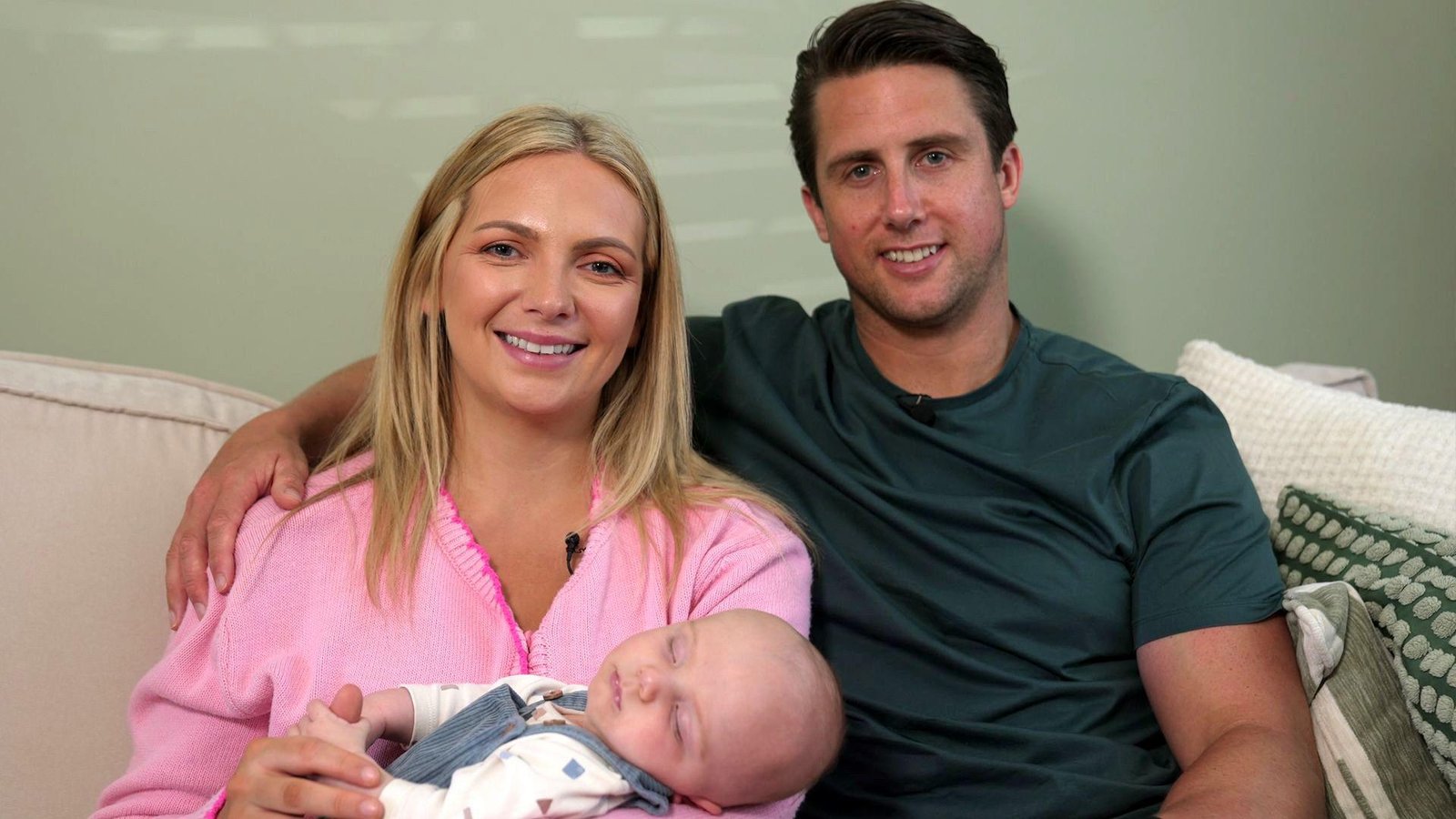

Doctors have achieved a medical milestone by performing groundbreaking surgery on an unborn baby to correct a life-threatening birth defect while he was still in the womb. The procedure, the first of its kind in a clinical trial, has given a London family a healthy, thriving son they call their ‘little miracle.’
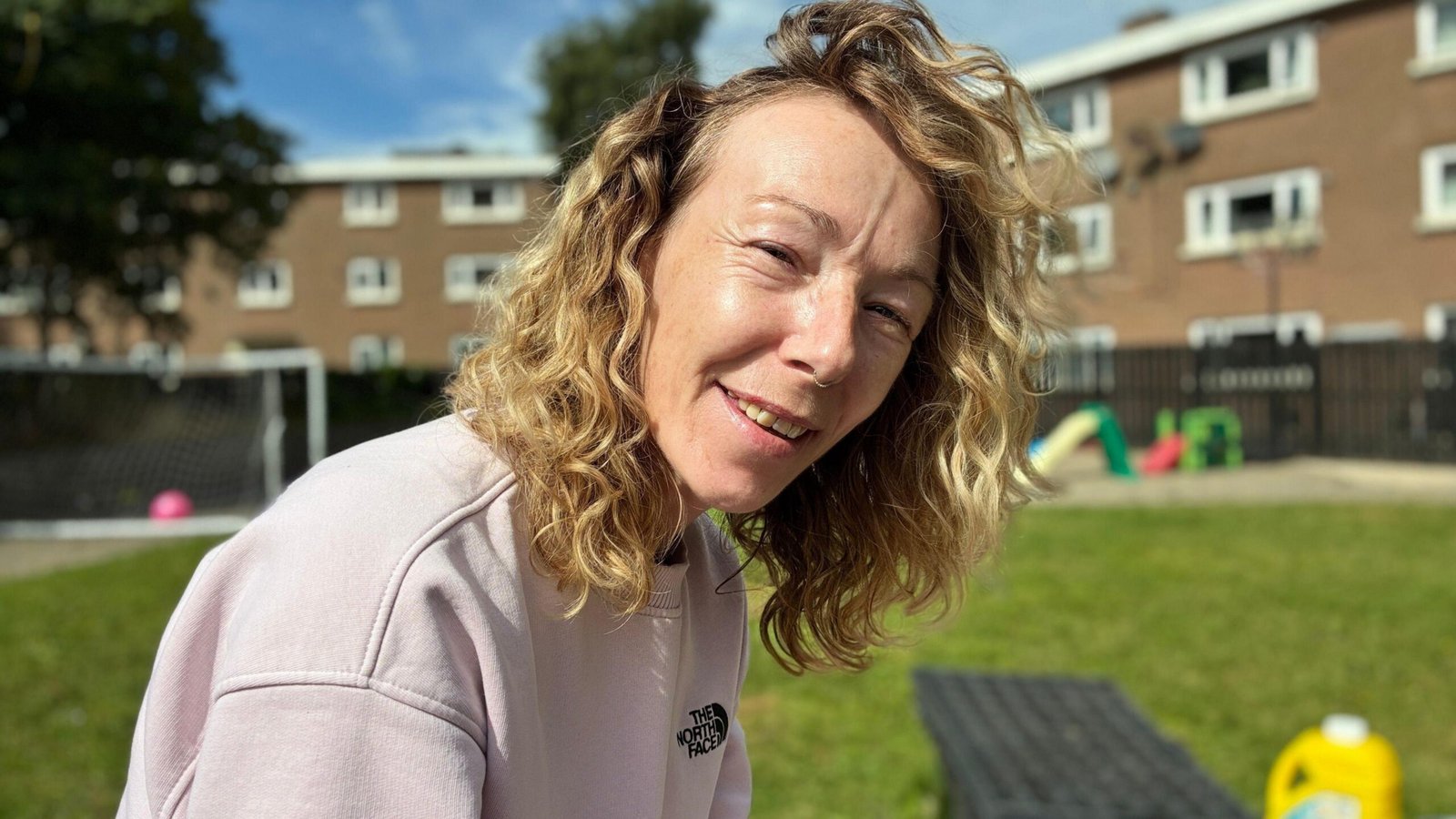
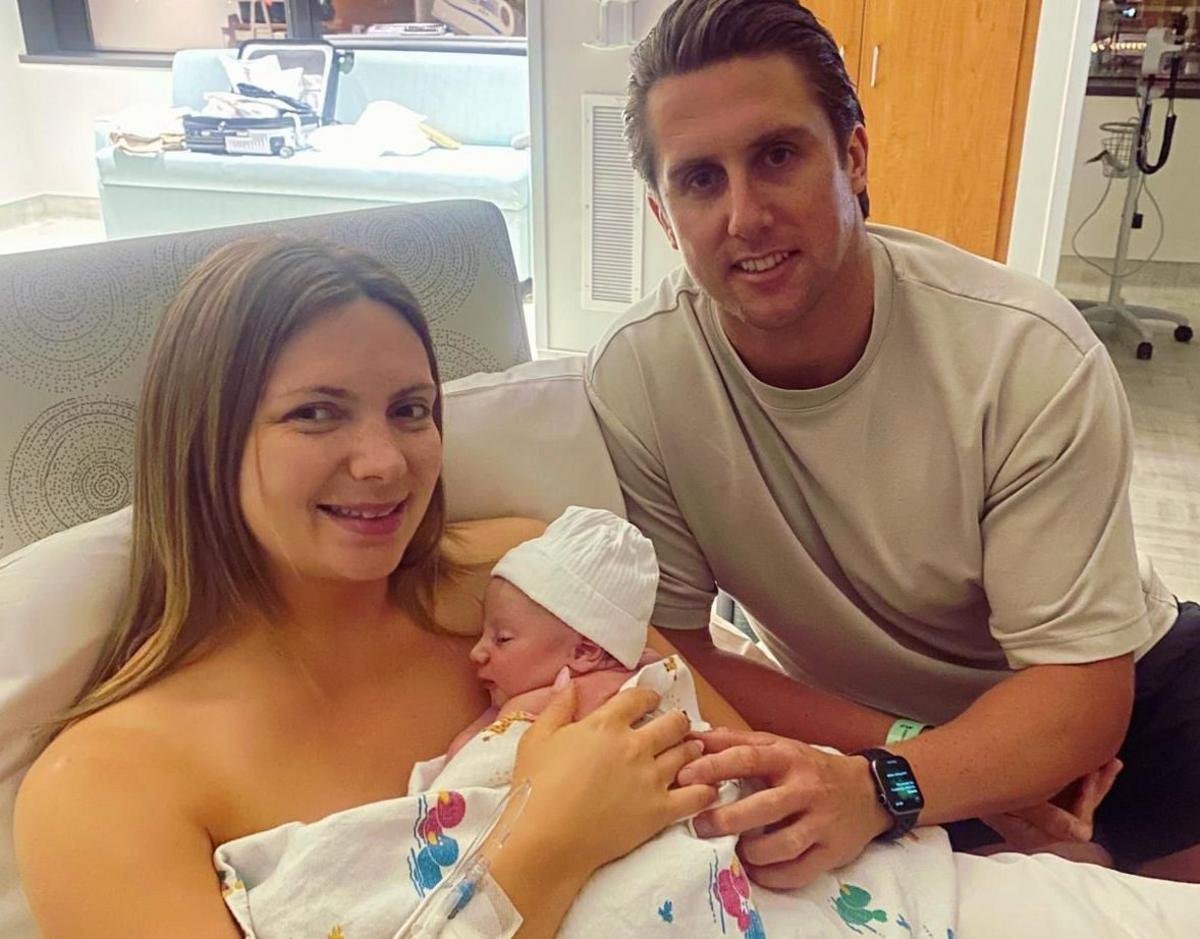
Maisie Savage, 29, and Josh French, 36, both teachers from London, faced an agonizing journey after learning their unborn son Theo had a severe form of gastroschisis—a condition where the intestines develop outside the body due to a defect in the abdominal wall. Thanks to an innovative operation performed at 26 weeks of pregnancy, Theo’s organs were gently guided back into place, allowing him to be born healthy and avoid the devastating outcomes often associated with this condition.
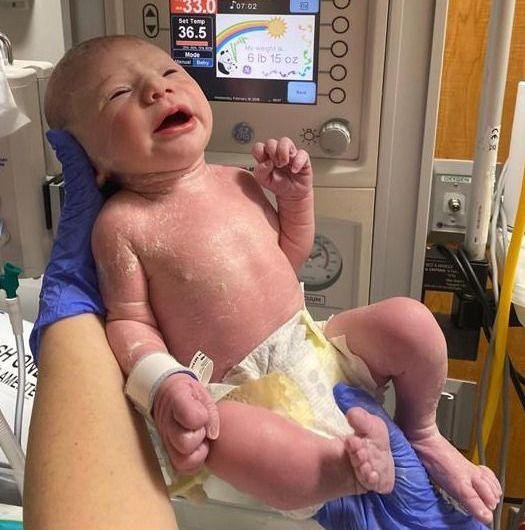
Today, five-month-old Theo is a happy, normal baby, a stark contrast to the dire predictions his parents initially received. His case marks a turning point in fetal medicine, offering hope to families worldwide facing similar diagnoses.
A Shocking Discovery at the 20-Week Scan
For Maisie and Josh, the journey began with the excitement of a routine 20-week ultrasound. ‘We were purely just excited to have an image of our baby,’ Josh recalled. ‘We didn’t know he was going to be a ‘he’ at the time.’ That joy quickly turned to fear when the scan revealed a serious anomaly.
The couple was told their baby had gastroschisis, a birth defect affecting about one in 3,000 babies in the UK each year. In this condition, the abdominal wall fails to close properly, leaving the intestines to float in the amniotic fluid. While some cases are manageable, the most complex forms can lead to severe complications, including intestinal damage, prolonged hospital stays, and even death.
At 24 weeks, specialists at London’s Great Ormond Street Hospital (GOSH) prepared the couple for what the first six months of Theo’s life might look like. The outlook was grim: potential weeks or months in intensive care, multiple surgeries, IV feeding for up to two years, and a possible intestinal transplant. Even with the best care, one in ten babies with complex gastroschisis does not survive.
Complex Gastroschisis: A More Serious Diagnosis
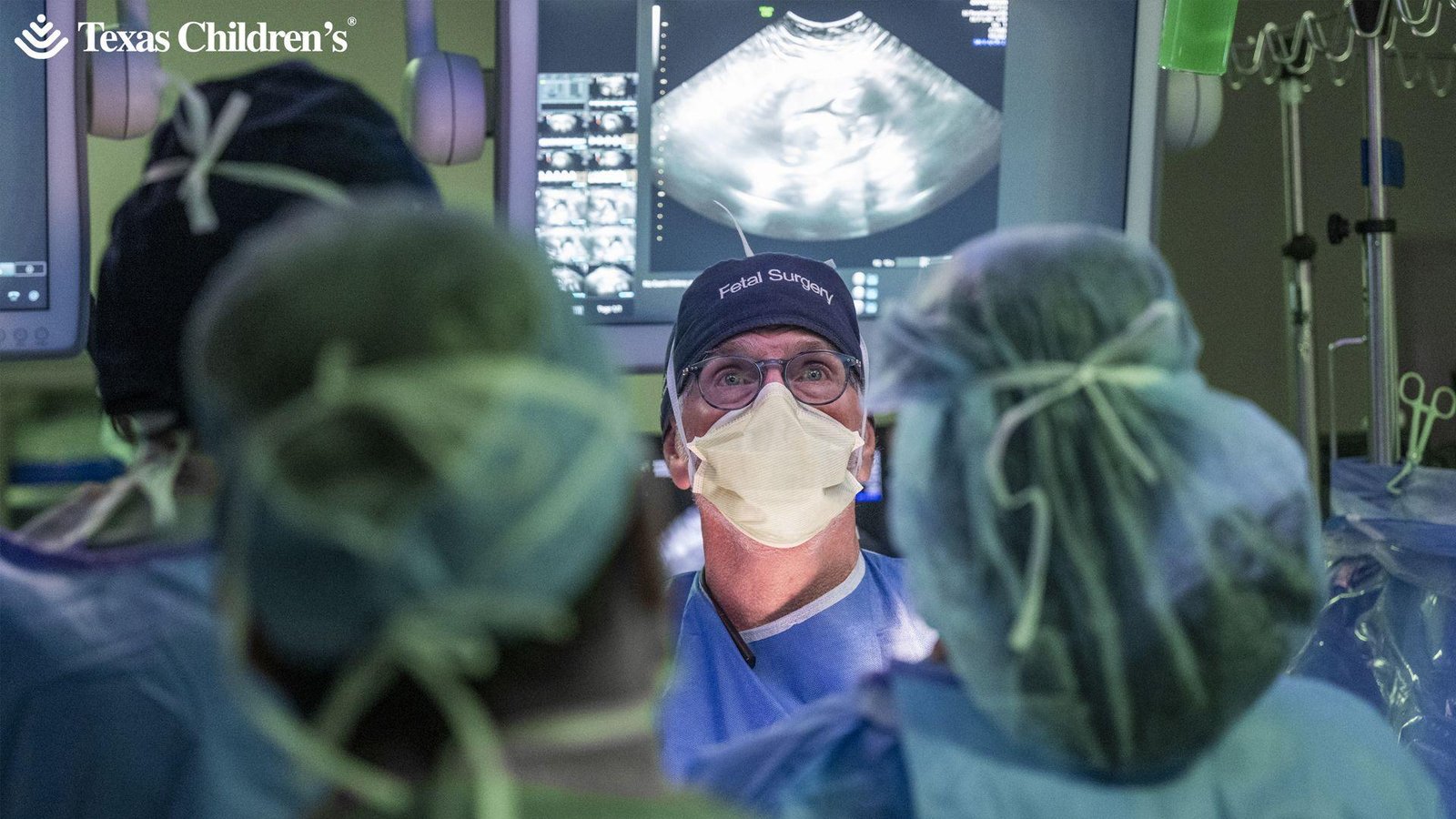
Further testing revealed that Theo had complex gastroschisis, a more severe form of the condition where the intestines are at high risk of twisting or dying before birth. This diagnosis changed everything. Instead of waiting for birth to intervene, doctors at GOSH referred the family to a pioneering clinical trial at Texas Children’s Hospital in Houston, led by Dr. Michael Belfort, a world-renowned fetal surgeon.
Dr. Belfort had previously pioneered in-utero surgery for spina bifida and was now testing a revolutionary approach to repair complex gastroschisis before birth. The trial offered a glimmer of hope where none had existed before.
The Pioneering Womb Surgery
Maisie and Josh faced a monumental decision: travel to the United States and undergo an experimental procedure, or stay in the UK and hope for the best after birth. ‘It was a huge decision,’ Maisie said. But with the stakes so high, they chose to pursue the surgery.
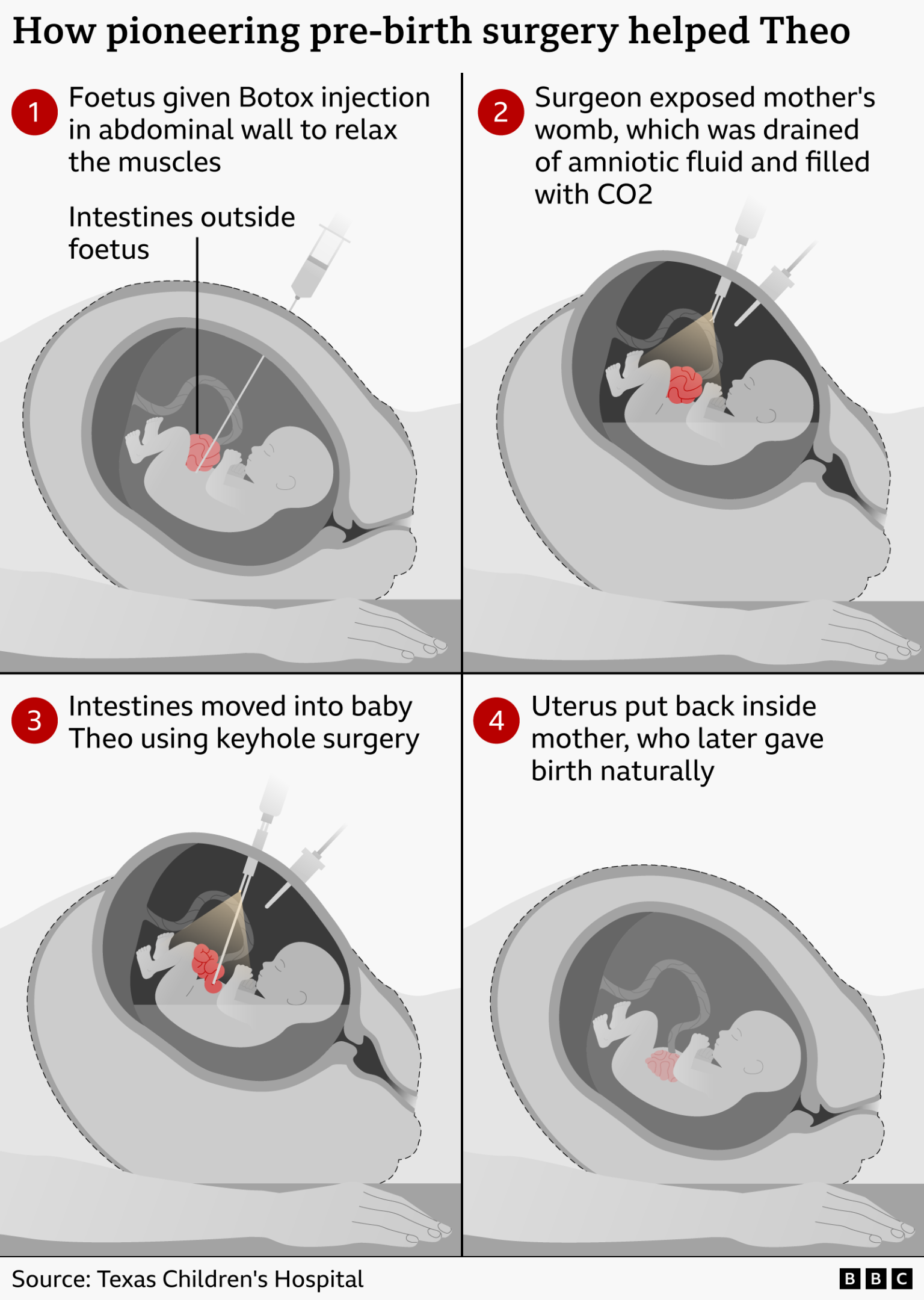
The journey began in Belgium, where specialists at Leuven Hospital administered a Botox injection through Maisie’s womb into Theo’s abdominal wall. This injection relaxed the fetal muscles, making the subsequent repair easier. From there, the family flew to Texas, where the surgery took place in November last year, when Maisie was 26 weeks pregnant.
Inside the Operating Room
The procedure was nothing short of extraordinary. Surgeons partially exposed Maisie’s uterus to position it and the baby, then drained the amniotic fluid and replaced it with carbon dioxide gas to create space. Using keyhole surgery, they gently pushed Theo’s intestines back into his abdomen and stitched the opening closed. The entire operation was performed while Theo remained safely inside his mother’s womb.
For Josh, the wait was agonizing. ‘The length of that day, it felt like a week,’ he said. ‘The waiting and just not knowing exactly what was going on at each and every stage.’ But the surgery was a complete success, with no complications during or after the procedure.
Recovery and a New Beginning
Maisie’s recovery was challenging. She was left with a scar twice the size of a C-section incision, and for the remaining 14 weeks of her pregnancy, Theo’s kicks would often hit the scar, causing pain. ‘It was a hard recovery,’ she admitted. ‘But it was worth it.’
The operation allowed Theo to be carried to term, and he was born in February via vaginal delivery in Texas. Dr. Belfort expressed his amazement at the outcome: ‘The mother, the baby, the surgery, the time of the surgery, the fact that we had zero complications during the fetal surgery and after the fetal surgery, just remarkable.’
A Normal Baby, A Grateful Family
Back home in London, Theo is thriving. ‘Everything they did just completely reversed what could have been a really horrible start to his life,’ Maisie said. ‘He’s just the best. He’s a completely normal baby essentially.’
Josh echoed her gratitude: ‘We both feel incredibly fortunate. The impact that they’ve had on us as a family is incredible. They made us feel so welcome from the team at Great Ormond Street to Dr. Belfort and the team. Whilst we were over there, the level of care was amazing, and they made a very traumatic time of our lives so much easier. And we’ve got this little man—we couldn’t be happier.’
The Future of Fetal Surgery
The success of this trial has opened doors to new possibilities in prenatal medicine. If the trial continues to show positive results, Professor Paolo de Coppi, a pediatric surgeon at GOSH, plans to bring the procedure to the UK. ‘We hope that we will be able to offer this to patients on a larger scale very soon,’ he said.
Dr. Belfort is equally optimistic about the collaboration between Texas Children’s and GOSH. ‘The inside of the uterus is now a new surgical space for innovation,’ he said. ‘And spina bifida and gastroschisis are just two. I believe that we could actually do certain cardiac surgeries in utero, and I think we can also do some lung surgeries in utero.’
For now, the focus is on Theo—a baby who defied the odds and whose story is a testament to the power of medical innovation and parental love. His parents hope their journey will inspire others and pave the way for more families to benefit from this life-changing surgery.